The Data Platform That Comes Built, Not Assembled
Most data platforms are assembled piece by piece, tool by tool, team by team. DataForge ships with the architecture already built and enforced, so your team focuses on using data, and the infrastructure to move it comes with the platform.
One platform. Complete architecture. Ready from day one.
Trusted by data leaders at companies like:

The Medallion Problem
Three Layers on the Whiteboard.
Fifty in Production.
Every data team eventually hits the same wall. The team grows. The pipeline count grows. But the work stays just as hard. Every new use case gets built a little differently by whoever builds it, and changing anything risks breaking something else.
Medallion was supposed to fix this. Bronze, silver, gold.
Three clean layers, a shared mental model that every team could build on. It made sense on a whiteboard.
In production, each team defines those layers differently, and pipelines pile up staging tables, temp layers and merge logic scattered across undocumented scripts. Tools like dbt, Airflow and Spark make that code faster to write and run, but they leave the architecture up to each team, so teams drift from it faster too.
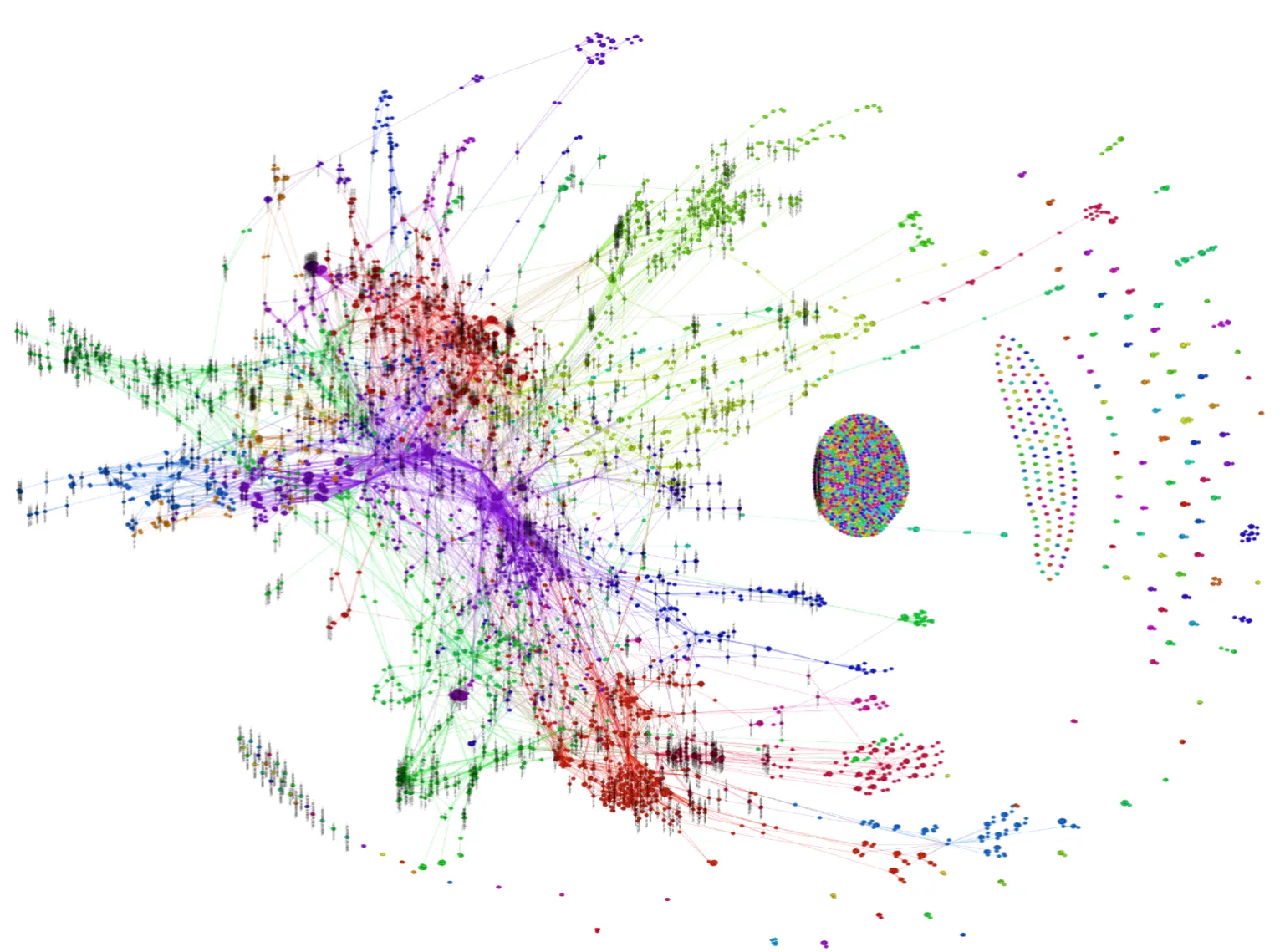
A real production data platform after years of custom pipeline development. Each point is a code package someone built by hand.
The DataForge Difference
We Built What Medallion Only Promised
DataForge is the architecture itself, already built and enforced. Every pipeline on DataForge follows the same refinement flow, no matter where the data comes from or which team builds it.
You define what the data should look like.
DataForge makes the decisions about layers, keys, processing order and failure handling for you, or removes the underlying problem. This applies to the build or migration, and to long-term development and maintenance as well. See the decisions built into the platform, and the ones your team keeps.
DataForge enforces how data moves through these layers, and your team decides how to model the output and where it goes.
The Platform
Three Capabilities. One System.
Alloy, Ember and Talos come as one platform, with zero integration needed between them.
Outcrop, how DataForge connects to your systems, brings data in from databases, applications, files and streams, on-premises and in the cloud, and sends results back out.
Alloy
The Storage Architecture for Every Pipeline
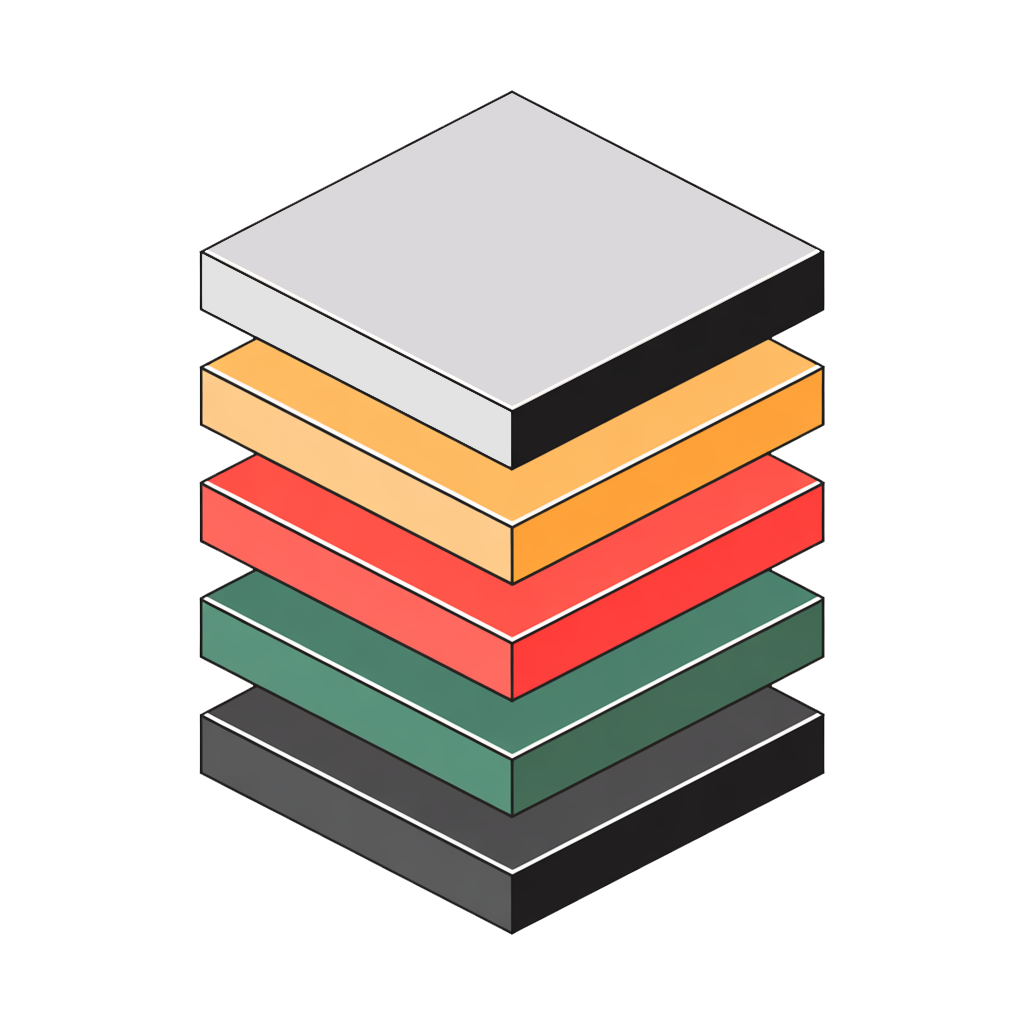
Alloy is the storage architecture every DataForge pipeline follows, and it is our alternative to Medallion. DataForge builds and enforces it, so your hundredth pipeline has the same design as your first.
Batch and streaming run through the same architecture, and it scales cleanly as you add sources and use cases.
Ember
The Prescriptive Catalog for Your Business Logic
Ember is the DataForge catalog, where your team writes its business logic as rules. Each rule adds one calculated column to a source, and it can read columns from other sources through relations.
DataForge turns that logic into pipelines that follow the Alloy architecture. Ember keeps the rules together with every run and its results, and you can trace any column back to the rule and the inputs behind it. The code DataForge manages is vanilla SQL, stored in a database your team can query.
Talos
The AI Control Plane for Data Platforms
Talos lets your team make changes in DataForge by asking in plain English. Every change it makes goes through the same validation as a change your team makes by hand.
Your team can also build with coding agents such as Claude Code and Codex through the DataForge MCP server, and every change an agent makes is validated the same way.

Watch the demo
Give Claude Code a broken Power BI report. See what happens next.
Watch it use DataForge MCP to rebuild the solution on Databricks, correct mistakes as it works, and leave only the business decisions to the human.
Delivery
We help you turn data from all your systems into AI your team can run
DataForge provides a pre-built, fully integrated data platform and helps you find and build the business logic that turns your raw operational data into business insight that can drive decisions and AI-native solutions. Our engineers connect the platform to your Databricks or Snowflake account and modernize a slice of what you run today as a pilot. Then they can build the production rollout with your team.
Our services are optional, and we are just as happy when your team builds and grows your reporting on its own. You can buy the platform and the build from one company. Where you already have a partner doing the build, or want one, we work alongside them and review what they build. You keep the decisions and the partner relationship.
Built for the Platforms You Already Use
Your data is stored and processed in your own Databricks or Snowflake account, on AWS, Azure or Google Cloud. DataForge orchestrates the pipelines that run there, on your compute.





"Service Logic benefits tremendously from DataForge because it keeps our data integrations organized over time despite a complex and expanding landscape of systems. The platform accelerated our initial data transformation and is easy to maintain and enhance with minimal resources, allowing us to generate clean analytics that demonstrate the value of our business model, all without the need for a large team of in-house data experts."

Levi Reeves
VP of Integrations & FP&A
Solution guides
Evaluate DataForge by platform goal
Enterprise data platform
Enterprise data platform for governed analytics at scale
DataForge helps CDOs, CFOs, and data platform leaders scale analytics on one platform in place of separate ETL, orchestration, observability, lineage, and cost-control tools.
Data pipeline platform
Data pipeline platform for complex enterprise source systems
Build, extend, orchestrate, and observe enterprise data pipelines through one consistent architecture while processing data in your Databricks or Snowflake account.
Data engineering platform
Data engineering platform with architecture built in
DataForge is a data engineering platform with automatically enforced architecture, replacing separate ETL, orchestration, observability, catalog, and infrastructure tools while processing data in your cloud.
Data orchestration platform
Data orchestration platform that replaces manually assembled DAG sprawl
DataForge orchestrates data pipelines from structured pipeline definitions, dependency metadata, scheduling, and execution history instead of manually maintained DAGs.
Data observability platform
Data observability platform with lineage, quality, audit, and cost context
DataForge observability ties code, orchestration, quality rules, alerts, lineage, audit trails, and cloud cost visibility back to the platform metadata.
Agentic data engineering
Agentic data engineering platform with save-time validation for AI agents
DataForge lets AI coding agents such as Claude Code and Codex build and operate governed data pipelines through an MCP server that validates every write at save.
Data replication
Data replication that ends inside the governed platform
DataForge replicates SQL Server change data through the Outcrop agent that runs inside your network, and merges it directly into governed tables that the transformation layer already consumes.
Ready to build better pipelines?
Try the platform for free, or talk to us about building your business logic on it.